History · Feb 6 · 8 min read
The Forgotten Bunkers of the North
Moss-covered concrete at the treeline: what abandoned fortifications can still teach us — and how to read them.
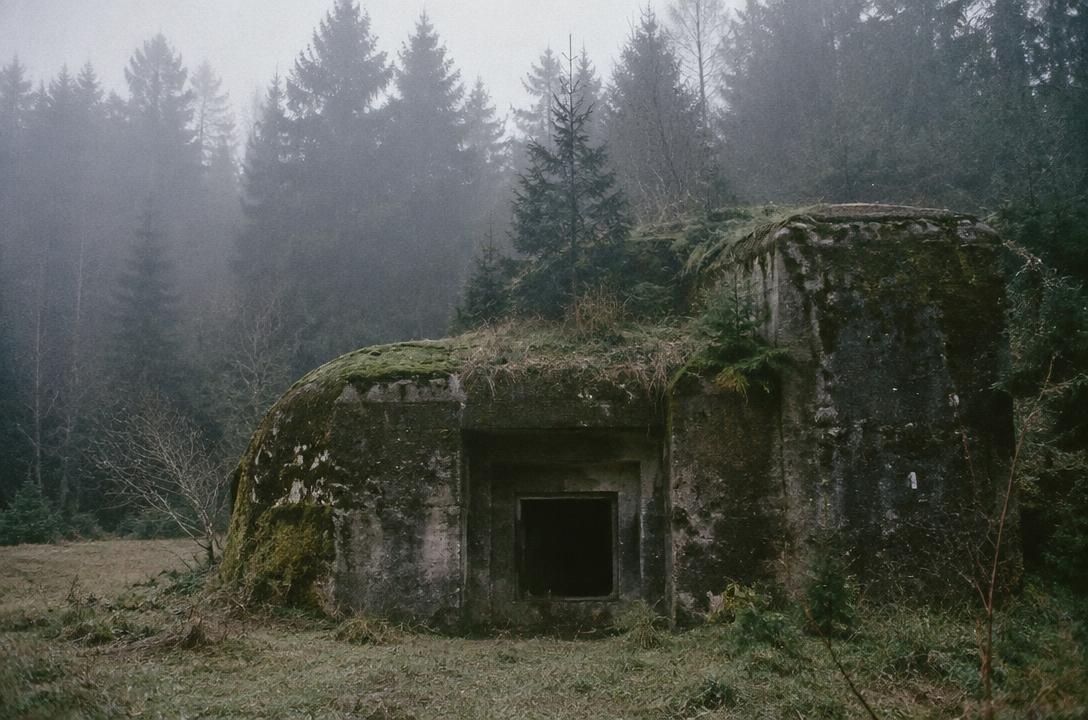
Walk almost any old borderland long enough and the forest starts giving things back. A low concrete shoulder in the ferns. A doorway with no building around it. These are the bunkers — fortified positions poured in concrete and then, one day, simply left behind.
Why they were built
For most of the twentieth century, the border regions of Europe were layered with defensive lines: machine-gun bunkers, observation posts, supply shelters. Each one was placed by hand — sightlines to a road, a bridge, a valley. When you stand inside one, the firing slits tell you exactly what the builders feared: the ground in front of them, and nothing else.
Construction tells its own story. Early positions were simple reinforced boxes. Later ones added angled walls to deflect shells, air filtration rooms, and escape tunnels. You can read decades of military thinking in a single cross-section of concrete.
Why they were abandoned
Doctrine moved faster than concrete. Aircraft, guided weapons, and mobile warfare made static lines expensive to defend and easy to bypass. Many were decommissioned within a generation of being poured. Demolition is costly, so the default was often to strip the fittings, seal the doors, and let the forest have them.
Concrete is patient. Give it sixty years and a pine seed, and it becomes a hillside.
What they look like now
Time has been the most effective camouflage engineer. Moss seals the roof, roots pry at the seams, and the forest grows right over the firing slits. Inside, though, the layout survives: bunks scratched into the walls, cable runs for the generator, painted numbers still visible where the damp has been kind.
Reading one respectfully
If you ever visit one, treat it as a museum no one curates. Never enter sealed or unstable structures, leave everything where it lies, and photograph rather than pocket. The best archives of these places are being built by photographers and hobby historians who document without disturbing.
Every one of these structures was built by people who expected to be needed. The fact that they weren't is, in its own way, the happiest kind of military history.
Filed by the readers of The Muster · Fan content, not an official source