Gear · Jan 15 · 6 min read
Signals from the Line
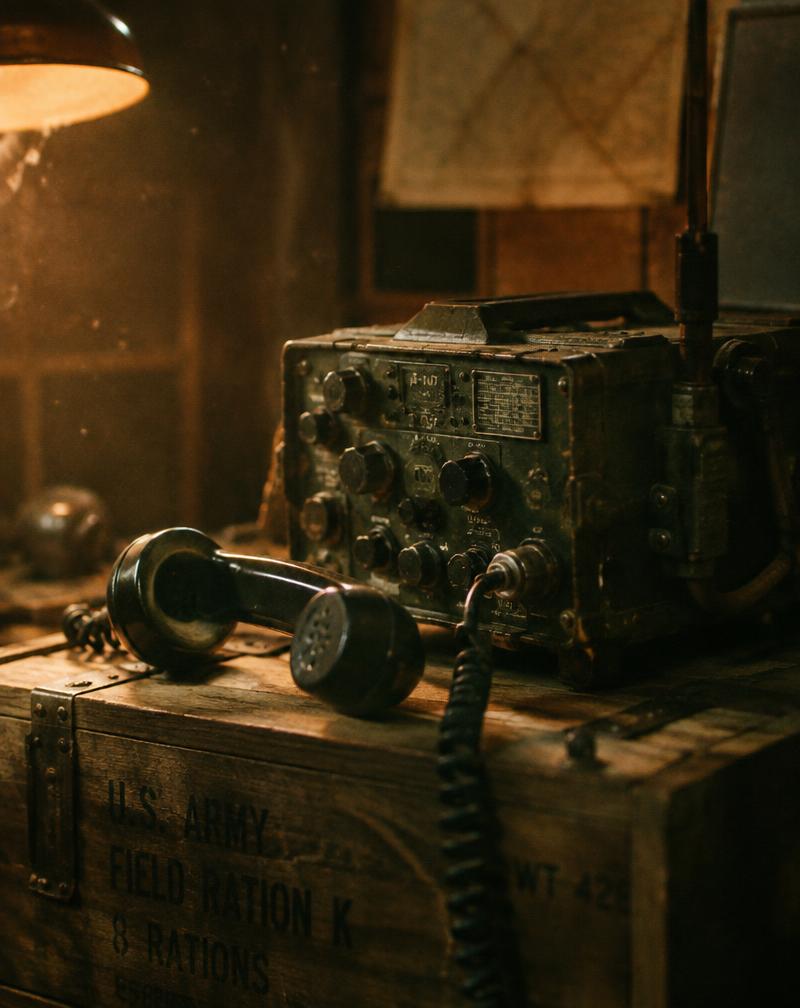
The handset, the crate, the hum. Field radios worked because everything about them was deliberately simple.
A field radio's job description never changed: receive orders under fire, from a box that a soldier can carry, repair, and trust. Everything else about the design was negotiable — and the designs that survived are the ones that took simplicity seriously.
Built to be abused
Pick up a field set and the first thing you notice is the weight. Steel cases, chunky knobs, a handset that doubles as a blunt instrument. This isn't clumsy engineering; it's engineering for hands in gloves, in the rain, at night, by someone who has been awake for thirty hours.
The handset
The telephone-style handset was the masterstroke. Everyone already knew how to hold one, so training took minutes instead of hours. Press the switch, talk, release. In an emergency, that simplicity was worth more than any amount of range or clarity.
The best radio is the one a nineteen-year-old can fix in the dark with a bayonet and a spare valve.
The crate tells the truth
Supply markings on the boxes — contents, weight, count — are some of the most honest documents of the war effort. Somebody had to carry every gram, and the stenciled numbers are the whole argument for why the radios got smaller every generation.
Collectors love these sets because they still work. Ninety percent of a field radio is switches, connectors, and valves — and all three can be brought back to life with patience and a soldering iron.
Filed by the readers of The Muster · Fan content, not an official source